






How does pallet liquidation work?
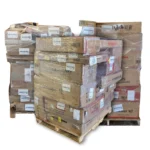
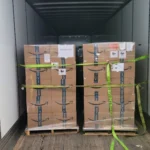
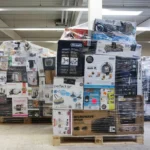
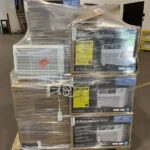
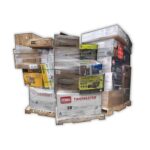
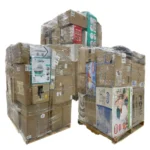
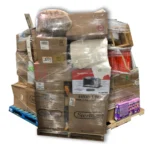
Retailers sell returned, overstock, and shelf-pull inventory in bulk to liquidators instead of restocking it, because handling it again costs more than it’s worth. Liquidators sort that product onto pallets often with a manifest and sell each pallet below wholesale. You buy the lot at one low price, then resell the items individually for profit. The gap between your pallet cost and the retail value is your margin.
What are the risks of buying liquidation pallets?
The main risks are mixed conditions, untested electronics, missing parts, and unsellable items inside lower-grade or “as-is” lots. Shipping costs and storage space can also cut into profit. You reduce nearly all of this by buying manifested pallets, reading the condition grade carefully, and choosing categories that match your resale channel. Informed buying turns most “risk” into a known, priced-in variable.
How can you tell if a pallet has been chemically treated?
Check the stamp on the wood. An IPPC mark with “HT” means heat treated no chemicals, safe for indoor and food-adjacent storage. “MB” means methyl bromide, a chemical fumigant you should avoid for indoor or food use. A wood pallet with no IPPC stamp has an unknown treatment history, so handle it with caution. Our pallets prioritize heat-treated wood so your inventory stays clean.
What are the three types of pallets?
By material, the three main types are wooden, plastic, and metal pallets. Wooden pallets are the most common and affordable; plastic pallets are lighter, hygienic, and reusable; metal pallets are the most durable for heavy loads. By design, you’ll also hear about stringer and block pallets, which describe how the deck is supported and how many directions a forklift can enter.
What are the rules for pallets?
Standard rules cover size, weight, and treatment. The common US standard size is the 48″ × 40″ GMA pallet, with load limits based on construction and condition. Pallets used in international shipping must meet ISPM 15 treatment rules and carry an IPPC stamp. Quality grades (A, B, recycled) describe wear and reusability. Safe stacking, even weight distribution, and inspecting for broken boards round out everyday handling rules.
What are the advantages and disadvantages of liquidation?
Advantages: deep wholesale discounts, brand-name merchandise, high resale margins, and bulk variety you can flip across multiple channels. Disadvantages: variable item condition, limited or no returns, the labor of testing and sorting, storage requirements, and the occasional unsellable item. For resellers who plan around grades and manifests, the advantages clearly outweigh the trade-offs which is why liquidation buying keeps growing.
What are the three types of liquidation?
In business terms, the three types are Members’ Voluntary Liquidation (a solvent company winding down), Creditors’ Voluntary Liquidation (an insolvent company closing voluntarily), and **Compulsory Liquidation** (court-ordered). In the US, asset liquidation often falls under Chapter 7 bankruptcy. For resale buyers, the takeaway is simple: liquidated inventory enters the wholesale market at steep discounts which is exactly the stock we pass on to you.